Classroom Scale & Dimension Objectives
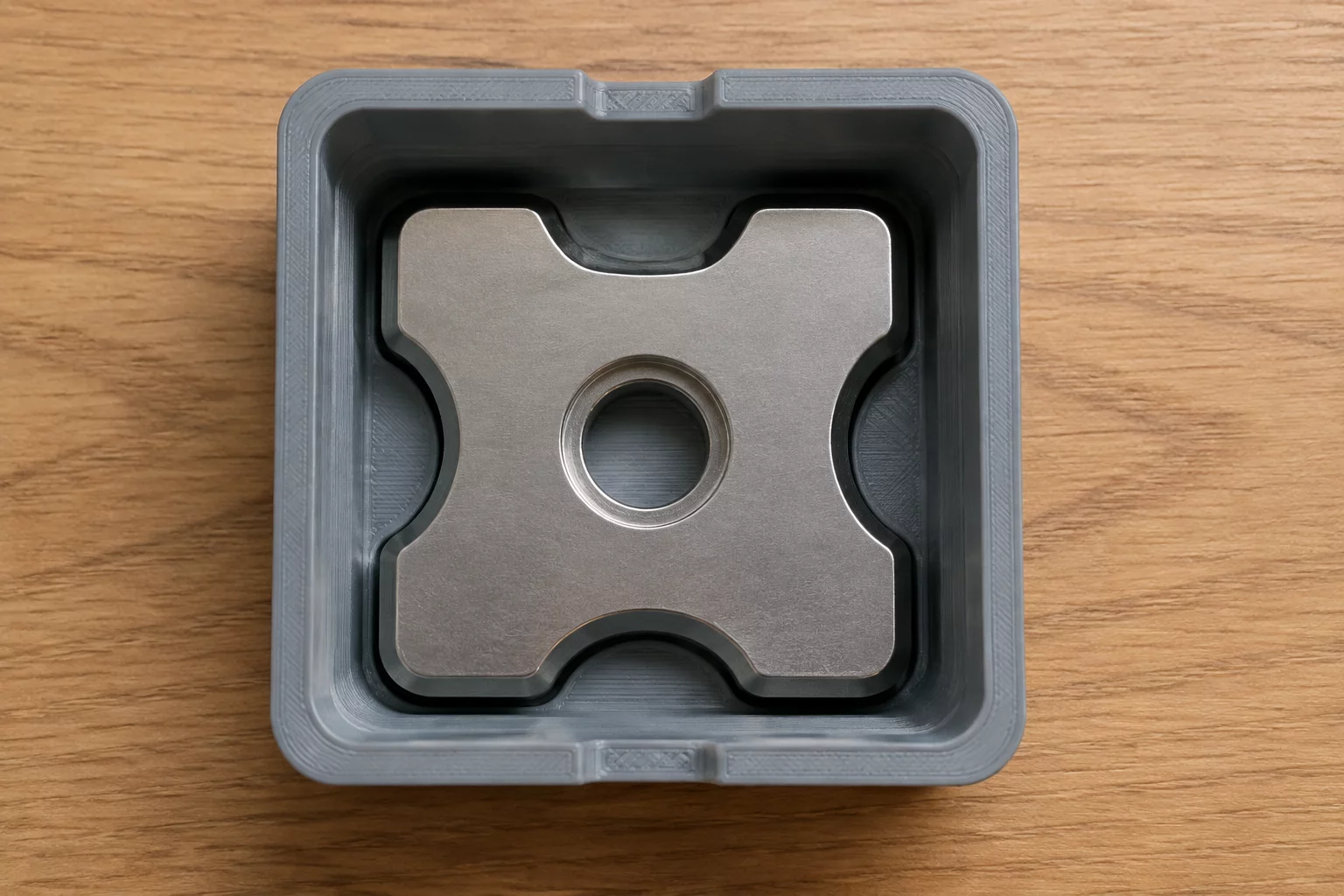
Beginner designers regularly build hollow cases using identical outer dimensions of the stored item. In physical production, 3D printer nozzle extrusion width and slight thermal material shrinkage create tight friction bounds that prevent objects from sliding into matching compartments smoothly.
In this exercise, students select common classroom objects like flash drives, erasers, or small batteries. Learners record outer boundary measurements across three axes, then calculate internal cavity dimensions that incorporate mechanical clearance offsets before adding decorative shells.
Proportion & Measurement Rule
Always add a minimum total clearance of 0.4 mm to internal width and depth dimensions when prototyping sliding-fit containers for FDM printing.
Step-by-Step Educational Workflow
Follow these structured phases to bridge the gap between physical measurement and digital cavity generation.
Stage 1: Physical Reference Measurement
Measure maximum outer dimensions across length, width, and height using digital calipers at three separate spots to capture slight manufacturing tapers.
Stage 2: Translating Values into Tinkercad
Create a solid reference surrogate with exact measured dimensions, enlarge it by the clearance margin, convert it into a hole object, and subtract it from the solid enclosure shell.
Stage 3: Testing Tolerances & Clearances
Inspect cross-sectional wall thickness, evaluate draft angles for smooth insertion, and verify whether finger cutouts or lid notches are needed for easy retrieval.
Formulas and Spatial Checks
Calculating container dimensions requires separating external wall stability from internal cavity volume. Keep exterior walls at least 1.6 mm thick to ensure four perimeter perimeters on standard 0.4 mm nozzles.
- Internal Width equals Measured Object Width plus 0.4 mm clearance
- Outer Wall Thickness maintains a minimum 1.6 mm solid perimeter
- Base Plate Elevation provides 2.0 mm solid bottom structure
Applying these proportional benchmarks prevents recurring assembly failures and trains students to view digital CAD tools as strict manufacturing blueprints rather than abstract sketchpads.
Sarah Jenkins
STEM EducatorMy eighth-grade students frequently forgot to account for thermal expansion in PLA prints until we introduced the 0.4mm perimeter offset step from this lesson. The container slide test instantly showed them why nominal dimensions differ from manufacturing tolerances.